Articles of Interest

Turbine’s D&D Online is generating 500% more revenue since adopting a complementary free-to-play model. Interestingly, the revenue spike is driven in part by a doubling of paying subscribers — a nice demonstration of how blended revenue models for online games can be particularly profitable.

Facebook will be taking a 30% cut from developers who use its Credits virtual currency, claiming that “early testing has shown that users paying with Facebook Credits are significantly more likely to complete a purchase than the average Facebook user.” 30% is an unsurprising percentage for Facebook to begin with because the bar has been set there by so many other digital platforms; most developers are unlikely to object as a result. I, on the other hand, would rather not forsake 30% of my revenue if I don’t have to (but then, I wouldn’t be surprised if Facebook eventually forces everyone’s hand by proactively merchandising titles that use Credits…)

Apple has banned thousands of apps containing adult content from the App Store without warning. With each passing day, this platform feels more like the “worst of both worlds” — i.e., all the disadvantages of an open platform (like too much competition, piracy, etc) and all the disadvantages of many closed platforms (remorseless management, poor merchandising, etc.) The emergence of successful F2P games in the App Store may be exciting, but it strikes me as a silver lining.

Wiiware reportedly generated $59m in 2009 (30% growth of 2008)… which doesn’t make me much more excited about the platform. Note that only one original WiiWare game apparently earned more than $2m in revenue in 2009, and that’s the incomparable World of Goo. And the next runner up may actually be well below $2m — it isn’t clear from the report.

Nice Gamasutra editorial on crunch. I liked this line: “In film and television, if an early treatment was suddenly plunged into full production, it would be considered a catastrophic failure of the development process. In the game industry, when a fledgling creative vision is suddenly staffed with talent, it’s considered ensuring success. This is a fundamental fallacy in our thinking.” I agree with the author on vertical slices: nice risk management in theory, but in practice an amazingly fun but crude-looking prototype is more valuable.

Offerpal and Amazon (via Mechanical Turk) have joined forces to essentially turn every single F2P game into a crowdsourcing game.

There’s more to life than games:

Brilliant satire: if the practice of journalism were like the practice of medicine in the United States

IGDA Board Elections

I decided to run for the board of the IGDA this year. As part of that process, I was asked to write a “candidate position statement” and answer some questions, all of which I have copied below. (This material is also available on the IGDA website.)

If you are an IGDA member, I would really appreciate your vote. The poll is open now and closes on February 28th.

Candidate Position Statement:

I am running for the IGDA Board because I believe the IGDA is faced with a vital problem: many people in our industry can’t see why they should join or actively participate in the IGDA. It’s easy to understand why. First, our industry’s most prestigious publications and conferences are operated by other organizations. Second, our government lobbying is led primarily by the ESA. And lastly, the tangible benefits of IGDA membership – other than the recent health insurance offering – are unclear to many people. I believe that lack of progress on these fronts will jeopardize the IGDA and undermine its ability to tackle issues its members care about, such as quality of life and credit standards.

We — that is, *all* game developers, not just the large companies that comprise the ESA’s membership — need an organization that represents our interests and enhances the creative and business opportunities available to each of us. But we will never reach that goal without first building an organization whose value to potential members is self-evident. When people can’t see the value in paying $48 bucks for an annual membership, you know something is wrong.

If elected, I will focus on increasing the tangible value of IGDA membership. I’d like to ensure that content from the excellent IGDA Leadership Forum is freely available to all members, not just those who can attend the event. I’d like to enhance the ties between the IGDA and GDC to the extent that it benefits IGDA members. I’d like to grow programs, such as the IGDA’s webinar series, that bring useful business and legal information to IGDA members worldwide. And lastly, I’d like to explore the creation of additional benefits like the IGDA’s new group health plan; for example, a group legal plan.

In my time as portfolio manager of Xbox LIVE Arcade and as a consultant, I’ve had the pleasure of meeting many game developers. What has differentiated those that succeed from those that struggle is a combination of skill, luck, access to information, and the ability (and opportunity) to promote themselves. The IGDA can’t give developers luck, but it *can* open their eyes to common stumbling blocks, teach them about business, enhance their networking opportunities and help improve their skills. It can reduce the financial burdens that developers face and arm them with the tools they need to succeed… and increase its own legitimacy in the process.

Continue reading

My GDC 2010 Lecture

My favorite conference of the year, GDC San Francisco, is almost upon us! The date, time and subject of my lecture is noted below. If you’ll be attending and would like to meet up, drop me a note. 🙂

Digital Distribution: How to Deal with the Parts that Suck and Capitalize on Everything Else
Date/Time: Thursday (March 11, 2010) 10:30am — 11:30am
Location (room): Room 303, South Hall
Format: 60-minute Lecture

Summary: This session will briefly summarize the current state of digital distribution across major marketplaces (console, Facebook, mobile, etc), examine the major challenges associated with digital distribution, and provide concrete strategies for success in these marketplaces. It should be of interest to both developers and publishers large and small, as it will address strategic errors commonly made by multi-billion dollar publishers and tiny startups alike. If you’re struggling to pick an ecosystem to focus on, or if you’ve picked an ecosystem but aren’t sure how to maximize your chances of success within it, this lecture is for you.

Articles of Interest

Regarding the iPad:

  • Common complaints about the device include: no Flash support, the screen’s “boxy” 4:3 aspect ratio, no user-facing camera (present even in cheap netbooks), and no multitasking. It is, in the words of many, “a big iPod Touch.”
  • RE: Kindle vs. iPad, a succinct argument by Paid Content: “Total cost of owning an iPad (assuming a $30 monthly data plan and 3 yr product life) is roughly 6x-7x the cost of a Kindle 2 (priced at $269 and likely going lower). Also, with an E-Ink screen, smaller form factor, lower weight, and better battery life, the Kindle may appeal more to serious book readers.” [I’ll add: these are solid arguments, but it’s worth mentioning that until we know the average price of apps in the Kindle App store, it’s very hard to estimate the “total cost” of ownership for a future Kindle owner.]
  • Penny Arcade elegantly captures the average enthusiast’s reaction to the iPad
  • Bottom line: I’d never bet against Apple, but that doesn’t mean I’d necessarily bet *on* Apple in this particular case. The prospects for v1 of the iPad are questionable enough (and the app store crowded enough) that I’m inclined to wait and see how things shape up post-launch. The Kindle App Store, on the other hand, intrigues me. There are supposedly a few million Kindle v2’s out there, and the App Store shouldn’t feel crowded at launch. The audience for the Kindle is older but generally tech-savvy. Seems like a nice potential opportunity for small, agile indies.

Wal-Mart and Best Buy have ended the sale of used games in their stores, forcing E-Play (the kiosk startup they were partnered with) to shut down.

A former Microsoft VP wrote an op-ed for the New York Times which slammed the company for fostering an organizational culture that actively thwarts innovation. His complaints mostly pointed to intense and destructive internal politics. IMO, the same complaint can be leveled against *most* large companies, so it’s unclear how much there is to blame here. That said, I have to admit that the politicking (plus strategic indecision) at MS really could be dizzying… especially when it resulted — as it frequently did — in major reorganizations! Three to four reorgs *a year* were not uncommon in my experience.

A large research study found that managers generally believe “recognition for good work” is the most important driver of positive morale and motivation for knowledge workers. The same managers considered “making progress in their jobs” to be the *least* important driver of morale and motivation. But when knowledge workers themselves were studied, the researchers determined that making progress was, in fact, the *most* important driver of morale! This won’t come as much of a surprise to anyone who has worked on a game that was ultimately canceled, or on a project that was undone by corporate politics (see the previous note on MS for added irony.)

As noted in my previous AoI, DS title sales appear to be softening. Michael Pachter is blaming it on piracy in Europe and cannibalization by iPod Touch games. How about rising consumer apathy towards the platform? I’ve used my DS just once in the past year, to play Scribblenauts.

There’s more to life than games:

Kristof on eastern Congo: “Sometimes I wish eastern Congo could suffer an earthquake or a tsunami, so that it might finally get the attention it needs. The barbaric civil war being waged here is the most lethal conflict since World War II and has claimed at least 30 times as many lives as the Haiti earthquake…. Human Rights Watch estimates that for every Hutu fighter sent back to Rwanda last year, at least seven women were raped and 900 people forced to flee for their lives.”

BoingBoing shows how incredibly adept criminals have become at using “skimmers” to steal ATM card information and rob banking customers. “The U.S. Secret Service estimates that annual losses from ATM fraud totaled about $1 billion in 2008, or about $350,000 each day. Card skimming, where the fraudster affixes a bogus card reader on top of the real reader, accounts for more than 80 percent of ATM fraud.”

Articles of Interest

Might as well post this tonight; I’m sure the Apple tablet is going to demand a whole post of its own.

(An illicit?) review of OnLive’s beta service. Summary: as rumored, the service works OK for games that aren’t “too twitchy,” like FPS. Avid PC gamers will likely be “very disappointed by the experience,” but then again, OnLive probably isn’t targeting avid PC gamers… it’s probably targeting the much larger number of people who aren’t willing to buy an expensive PC and deal with driver conflicts, inexplicable crashes, etc. I should add that the comparison videos in this writeup were interesting… OnLive is definitely scaling back the graphical fidelity of the games it hosts.

Exciting news about the Kindle Development Kit (KDK), which rolls out next month in limited beta and will permit for games on the Kindle. Should prove lucrative for the early adopters who position themselves correctly and make it into the launch portfolio.

Snackable Media generated *$170m* from SMS-based gaming content in 2009?? That managed to slip right under my radar until now. (Snackable’s most popular title is a celebrity & pop culture txt trivia game offering $50k in prize money — it has a million monthly active users paying $10 bucks a month.)

Pocket God and Flight Control both hit 2m units sold on the iPhone. And speaking of iPhone; here’s an article highlighting the effectiveness of in-app purchases.

Microsoft just unveiled Ribbon Hero, a game that teaches you how to use MS Office. Danc advised the team that built it, and rightly labels the fact that it even exists a minor miracle. 😉

Looks like the market for 3rd party DS games is collapsing, according to Ubisoft.

More than half the most popular e-books on the Kindle are available at no charge. Publishers are offering free versions of digital books in hopes of hooking readers on longer series by relatively unknown writers.

Top Xbox Live Indie Games are estimated to earn between $21k and $130k, according to Kotaku. (I assume that “top” probably means the top 1% of the catalog, give or take.)

Traditional Publishers on Facebook

I was recently interviewed by Matt Martin of GamesIndustry.biz on the subject of publishers making the transition to Facebook. Since my correspondence with Matt was via email, I thought I’d take advantage and share the full transcript, for those of you who are interested in this topic:

Question: Is Facebook a viable format for traditional videogame publishers? Are there opportunities for someone like EA or Take 2 to make a significant profit? Or is Facebook as a platform over for those big publishers that haven’t already established themselves on the service?

Facebook is definitely a viable platform for traditional publishers. The short-term problem, as I’ve noted in the past, is that traditional publishers simply aren’t geared towards making the kinds of games that succeed on Facebook. In general, their game designers are trained (and prefer) to make games that are fun above all else, where a Facebook game designer needs to be as concerned with designing a free-to-play game that is capable of generating real revenue. And in general, their designers are also accustomed to thinking of player acquisition as “marketing’s problem,” whereas viral player acquisition is clearly a core design challenge on Facebook. But I don’t want to make it sound like design is the only challenge; traditional publishers don’t have much experience marketing these kinds of games, in this kind of channel, to this broad an audience. They’re set up to manage the relationship with Microsoft, Sony and Nintendo, to push discs into retail stores, and to blow a wad of cash on TV and magazine advertising. Obviously this is a generalization, but you get my point.

But as I mentioned earlier, that’s all a short-term problem. There’s no inherent reason why traditional publishers can’t build (or buy) fresh studios to focus on this opportunity. They’ve done it before; mobile games are a good example. The traditional publishers will end up wasting quite a lot of money in the process — you can be certain of that — but some of them will ultimately succeed at entering the market.

Continue reading

Aid to Haiti

For those of you who have been considering making a donation to help the people of Haiti, but who have been deterred by the bewildering array of non-profit organizations currently asking for help, my wife has identified Partners In Health as a group that has been operating in Haiti for a very long time and has relationships, knowledge and infrastructure to leverage during this crisis, which will hopefully make them a little more effective. Here’s a note that we received from Partners in Health after making our own donation.

Continue reading

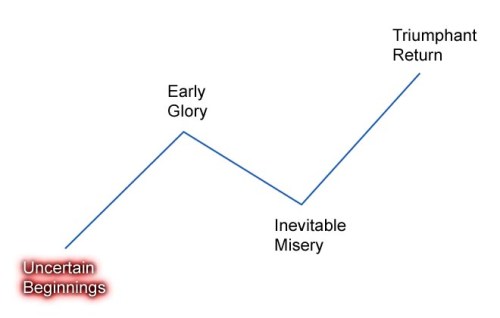
Facebook’s Early Glory and Inevitable Misery

When I look at Facebook, I see a games platform that has been thoroughly enjoying the “early glory” phase of maturity. Not too long ago, there was guarded optimism about the potential of Facebook to host profitable games, but few good examples of such games. Less than a blink of an eye later, Facebook has become the apple of our industry’s eye.

While most publishers are laying employees off by the hundreds, Facebook-centric publishers are hiring like mad. Savvy conference organizers are rushing to capitalize on audience demand for business venues to discuss social gaming. The inevitable stories of unbelievable growth have, quite predictably, become common-place. Facebook’s platform managers have finally started embracing our industry and contributing to the hype around their platform. And finally, a remarkable number of developers (and even large publishers) have begun to re-orient themselves towards the development of social games.

Facebook’s “inevitable misery”

All of these are classic signs that Facebook gaming’s “early glory” phase is in full swing. You may therefore conclude, with 99% certainty, that Facebook as a games platform is likely within a single year’s reach of the “inevitable misery” phase of its lifecycle. Probably much less than a year, in fact. As I’ve argued before, this does not necessarily mean that savvy developers should begin to look elsewhere — it simply means that there will soon be a large quantity of blood in Facebook’s waters. The victims of that impending blood-bath are listed here, in no particular order:

Continue reading

Articles of Interest

An in-depth look at the reasons Duke Nukem Forever never shipped. This is one of the better articles I’ve read in Wired.

I appreciate time/date and season-specific functionality in games, such as the Christmas-linked “Pure White” mode in Demon’s Souls. Why don’t more games do stuff like this on a larger scale? Make it server-based and you’ve just reduced player incentive to resell games (i.e. you might miss out on cool functionality that only gets unlocked on certain days of the year.)

The free version of Shazam for the iPhone was recently limited to five uses a month, while a new $4.99 version supports unlimited uses. The $4.99 version is supposedly selling well, which should be encouraging to all iPhone developers. (It ain’t easy to convince people to pay for something that was previously free.) Also notable: Shazam has apparently been adding 500k new users every week for an entire year.

Steve Perlman demos OnLive and discusses everything – the technology, the business model, etc. I’m still in “believe it when I see it” mode… but I’m definitely eager to see it. 🙂

Things that retail game publishers worry about: 2009 saw 1,099 retail game releases across all major platforms, increasing the total games available to consumers by 55%. At least 50 games (i.e. Call of Duty and GTA) are permanent fixtures on the retail shelf. What’s all this translate to? Less available shelf space, and less average shelf-time per game.

Google’s answer to the iPhone was finally unveiled. Looks slick, but my main reason for being interested in it has less to do with the phone, and more to do with abandoning the train wreck that is AT&T’s overburdened network.

There’s more to life than games:

A remarkably well-written essay about the death penalty; it exposes the flaws in arson investigation practices and tackles Texas’ criminal justice system, in general. Fair warning: it’s a very long essay, but one worth reading regardless of whether or not you support the death penalty.

Israel will become the first country in the world to give people who sign their organ donor cards “points”; these points push your name higher up on the transplant waiting list in the event that you personally require an organ donation. Seems like the only fair system, to me.

Amazing, amazing anti-aging related research! Let the vampire jokes begin…

A Game Developer’s Catch-22: Market Timing

This article was originally published by Gamasutra on 12/22/09, and later on GameSetWatch. I’m republishing it here for those of you who missed it. I recommend checking out the original articles, as both have received interesting comments that you may appreciate.

In my experience, one of the problems that most seems to bedevil game developers is the problem of timing; specifically, understanding when is the “right time” to begin developing for a specific platform. To understand why this is such a challenge for developers, you need to understand how a games platform tends to evolve.

Here’s the typical scenario: A platform — for example, XBLA, or the iPhone app store, or Facebook — comes into existence. Most people regard the platform suspiciously, for a variety of reasons. It’s an unproven market, for starters. The platform owner’s commitment to growing the platform may be unclear. The pros and cons of working with the platform owner in this context are unknown. There are lots of other platforms to choose from. Etc. Most developers take all this into account and decide to pass on the platform for the time being.

Continue reading